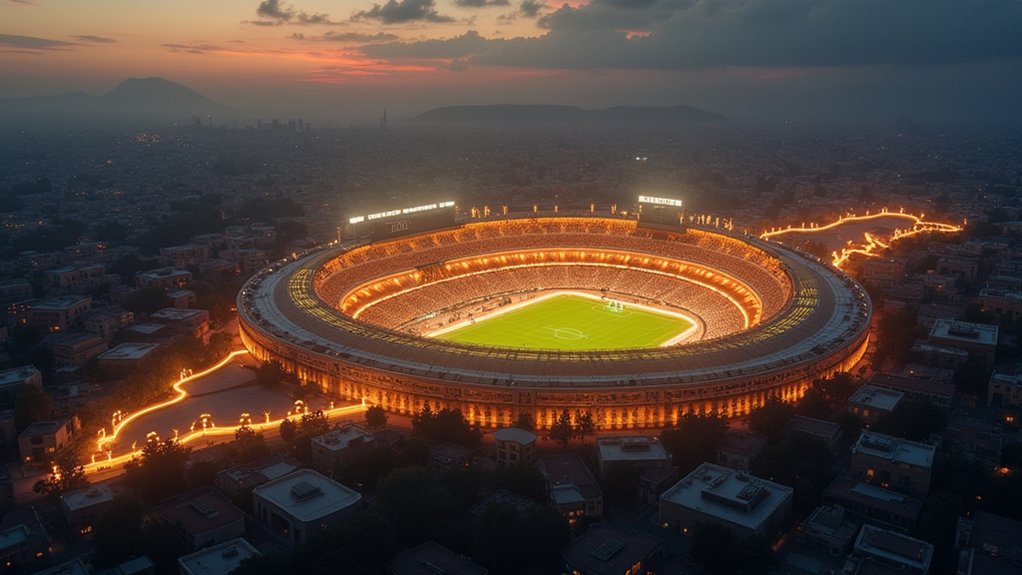
Morocco’s stadium-building push has paid off. The country now leads Africa with 16 CAF-approved stadiums for continental competitions in the 2026–2027 cycle, three ahead of South Africa’s 13. It’s a milestone that reflects years of steady investment in football infrastructure and a deliberate strategy to meet the continental governing body’s licensing standards. These same venues also serve as the home grounds for the Morocco national team’s competitive matches, friendlies, and major tournaments, with the squad widely known by its nickname, the Atlas Lions.
The rise did not happen overnight. In the 2024–2025 cycle, Morocco had just 8 stadiums pre-approved for CAF interclub competitions, trailing South Africa’s 11 at the time. By the 2025–2026 season, that number climbed to 10, though South Africa still held the top spot with 13 approved venues, and Algeria followed with 9.
Later that same cycle, CAF’s licensing commission accredited 12 Moroccan stadiums for group-stage competition, a domestic record at the time. The latest homologation round pushed that figure to 16, finally overtaking South Africa and placing Morocco at the top of the continental list.
This progress stems from CAF’s licensing commission, which evaluates stadiums on infrastructure quality, safety measures, pitch conditions, and overall compliance with continental standards. Passing these assessments requires sustained upgrades rather than one-time fixes, and Morocco’s steady climb from 8 to 16 approved venues suggests a coordinated national effort rather than isolated improvements.
The approved stadiums span much of the country. Casablanca contributes Complexe Mohammed V and Stade Larbi Zaouli. Rabat offers three venues: Complexe Sportif Prince Moulay Abdellah, Stade Olympique Rabat, and Stade Prince Héritier Moulay El Hassan.
Beyond the two largest cities, Grand Stade de Marrakech, Adrar Stadium in Agadir, and Grand Stade de Fès add further capacity. Smaller cities are represented too, including Stade Municipal Berkane, Stade El Abdi in El Jadida, Stade d’Honneur Oujda, Grand Stade d’Al Hoceima, and Stade d’Honneur Meknès.
That geographic spread matters. Rather than concentrating approved venues in one or two hubs, Morocco has built out coverage across ten cities, giving CAF competitions options nationwide. Alongside South Africa, Algeria, Egypt, and Ivory Coast, Morocco remains part of a small group of nations consistently near the top of CAF’s stadium rankings. For now, though, it stands alone at number one.
Get the Atlas Lions Weekly
The biggest Morocco football stories, player updates and analysis—delivered to your inbox every Sunday.